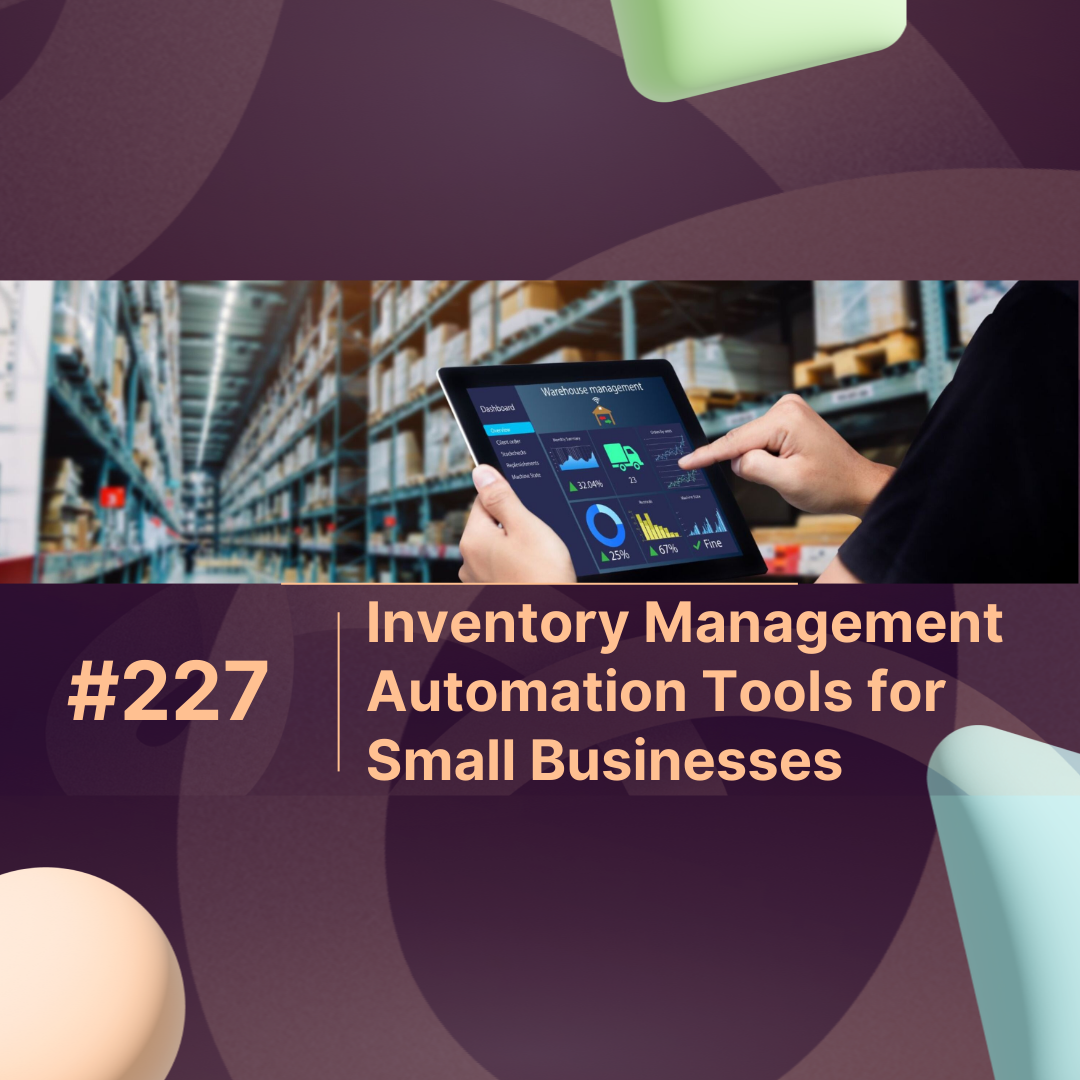

Looking for a faster, error-free way to manage stock in 2026?
Inventory management automation tools are no longer optional for small businesses they are essential for staying competitive, profitable, and scalable in an AI-driven market.
This article provides a direct, followed by an in-depth, human-friendly guide covering benefits, features, data-backed insights, and FAQs. It is genuinely helpful for business owners.
Overview
Inventory management automation tools help small businesses automatically track stock levels, sync sales and purchases, reduce manual errors, and improve cash flow using software instead of spreadsheets.
In 2026, these tools integrate AI forecasting, real-time analytics, and ERP systems like Max ERP, making inventory control faster, smarter, and more affordable than ever.
What Are Inventory Management Automation Tools?
Inventory management automation tools are software solutions that automatically handle stock tracking, order management, supplier updates, and demand forecasting without manual intervention.
Instead of updating inventory spreadsheets by hand, these tools:
-
Track inventory in real time
-
Sync sales across channels (online, POS, marketplaces)
-
Trigger automatic reorders
-
Reduce stockouts and overstocking
For small businesses, automation means less time managing inventory and more time growing revenue.
Why Inventory Automation Is Critical for Small Businesses in 2026
Small businesses face rising costs, faster delivery expectations, and multi-channel selling. Manual inventory systems simply can’t keep up.
Key reasons automation matters now:
-
Human error rates drop by up to 80% with automation
-
Stockouts reduce by 30–50% using predictive forecasting
-
Inventory holding costs fall by 10–25%
-
AI-driven tools improve cash flow visibility
According to industry benchmarks, businesses using inventory automation grow 2× faster than those relying on manual systems.
Core Features to Look for in Inventory Management Automation Tools
When evaluating inventory management automation tools for small businesses, prioritize these features:
1. Real-Time Inventory Tracking
Know exactly what’s in stock, across all locations, instantly.
2. Automated Reordering
Set reorder points so the system purchases stock automatically.
3. AI Demand Forecasting
Uses historical data to predict future demand and seasonal trends.
4. Multi-Channel Sync
Sync inventory across eCommerce, POS, warehouses, and marketplaces.
5. ERP Integration (e.g., Max ERP)
Connect inventory with accounting, CRM, and supply chain systems.
Inventory Automation vs Manual Management (Data Comparison)
| Metric | Manual Inventory | Automated Inventory Tools |
|---|---|---|
| Inventory Accuracy | 60–70% | 95–99% |
| Stockout Frequency | High | Low |
| Time Spent Weekly | 10–15 hours | 1–3 hours |
| Error Rate | High | Very Low |
| Scalability | Limited | High |
Automation clearly delivers measurable efficiency and profitability gains.
How Max ERP Enhances Inventory Automation
Max ERP stands out in 2026 as a scalable, small-business–friendly ERP solution that integrates seamlessly with inventory management automation tools.
Why Max ERP works well for small businesses:
-
Centralized inventory + finance + sales data
-
Automated stock valuation and reporting
-
AI-powered insights for purchasing decisions
-
Cloud-based access with enterprise-level security
Using inventory automation with Max ERP creates a single source of truth, reducing operational blind spots.
Conversational Advice: Is Inventory Automation Worth It?
Short answer: Yes—if you want to grow without chaos.
If you’re selling more than 20–30 SKUs, managing multiple suppliers, or selling online and offline, inventory automation pays for itself quickly. Most small businesses recover the cost within 3–6 months through reduced waste and better purchasing decisions.
Best Practices to Implement Inventory Automation Successfully
-
Start with clean inventory data
-
Set realistic reorder thresholds
-
Train staff on dashboards and alerts
-
Integrate with accounting or ERP tools like Max ERP
-
Review AI forecasts monthly for accuracy
Conclusion: Inventory Automation Is a Growth Lever in 2026
Inventory management automation tools are one of the highest-ROI investments a small business can make in 2026.
They reduce errors, save time, improve cash flow, and support smarter decision-making. When paired with platforms like Max ERP, they create a future-ready inventory system that scales with your business—not against it.
FAQs: Inventory Management Automation Tools
1. What are the best inventory management automation tools for small businesses?
The best tools offer real-time tracking, automated reordering, AI forecasting, and ERP integration. Tools that integrate with systems like Max ERP are especially effective.
2. Are inventory management automation tools expensive?
Most tools are affordable SaaS solutions. Small businesses typically see ROI within 3–6 months due to reduced stock losses and labor costs.
3. Can inventory automation work for very small businesses?
Yes. Even businesses with limited SKUs benefit from automation by reducing errors and saving time as they grow.
4. How does AI improve inventory management automation?
AI predicts demand, identifies trends, and optimizes reorder timing, reducing stockouts and overstocking.
5. Can inventory automation integrate with accounting software?
Yes. Modern tools integrate with accounting, CRM, and ERP platforms like Max ERP for unified business management.